Salisbury (Sarum) Probus Club
Sarum Probus Club is an organisation for retired men living in the Salisbury Area.
Previous Meetings 2026
Far Eastern Travels
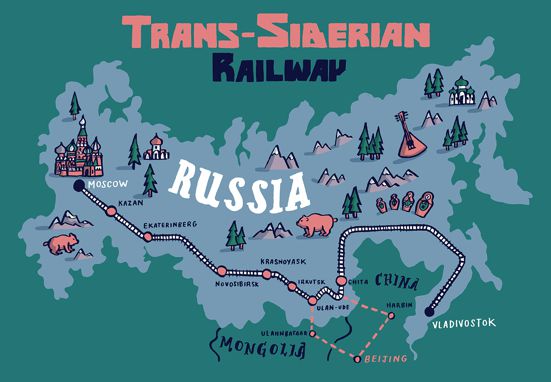
Andrew Negus gave a
fascinating talk to Sarum Probus Club on 13th February 2026.
As a young man Andrew had ventured as far as New Zealand backpacking.
Therefore, in 1991, after the death of his wife, to find some peace
after a time of grief, he set out to make a second journey there and
meet up with old friends. This time he would go by train.
His talk told us the
first part of his venture, the journey to China. He took his backpack
and a small pouch of money strapped carefully to his chest. He decided
to use the Trans-Siberian Railway stopping en route to see many historic
cities. He was travelling alone but soon found travel companions from a
variety of countries.
Warsaw was one place
he stopped and he was surprised at how anti-Russian the people were in
those early years following independence from the Soviet Union.
Travelling on to Moscow he was impressed by how colourful the city was.
Living on a very low budget Andrew was pleased too, that food, although
not of great quality, was relatively cheap. The Russian travellers on
the train were very hospitable.
In Mongolia
passengers had to alight while wheels were changed to fit a different
gauge and then, when leaving the country alight again while the wheels
were changed back.
Finally Andrew
reached China. In 1991 there were almost no cars in the country, people
mostly used bicycles or buses. He was also thrown because all signs were
in Chinese and Andrew knew very little. There was no European food and
foreigners were only allowed to stay in designated hotels.
At first it all
seemed rather drab and disappointing. Andrew decided to stay as planned
and he began to see China through new eyes. He visited the Great Wall
and the Emperor’s Palace, both great feats of engineering.
This was only the
first part of Andrew’s Venture and members look forward to hearing more
some time in the future.
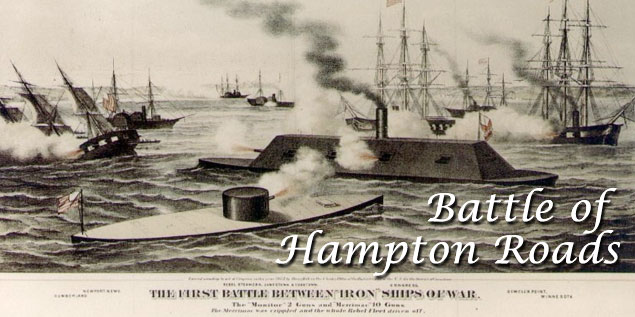
Lt Col James Porter
spoke to us on 8th May about the first sea battle where iron
clad ships clashed. It took place during the American Civil War in 1862.
The Southern Confederacy had as its capital Richmond and its access to
the sea was via James River and Chesapeake Bay. The Unionists were
blocking the river with a force of wooden hull ships which their
industrial superiority had enabled them to build.
The Naval Commander
at Norfolk, adjacent to Chesapeake Bay had skuttled the Virginian fleet
when Virginia opted to join the South. The ships had been burnt but
Confederacy salvage teams had rescued the hull of the Merrimack and
decided to relaunch it with iron cladding. They renamed it the
“Virginia” and it duly set forth in March 1862 to attack the Union’s
ships blockading the river at Hudsons Roads.
It managed to inflict
considerable damage on several of the ships using guns and also, in one
case, a metal ramming beak. Meanwhile an Iron clad ship which had been
built in New York was being towed down to join in the battle. It was
called the “Monitor” and, due to the speed with which it had been built
and the urgent need, arrived untested. It was particularly unable to
cope with rough seas and it was a miracle it reached the Hudson Roads in
tikme to engage. But the ship had one new feature which was to
become a mark of the future. It
had a gun turret which enabled guns to be swiveled for attack rather
than the fixed guns of previous ships. The battle ensued. After several
skirmishes neither ship was able to penetrate the armour of the other
and eventually the “Monitor“ had to retire to upload more ammunition.
The captain of the “Virginia” took the opportunity to withdraw claiming
victory. The clash was in fact a stalemate. James Porter’s account was
very detailed and gave almost a blow by blow account of the incident
which one can’t include in a brief summary. It was very fascinating
especially to those of us who hadn’t realized iron was used to clad
ships as early as the middle of the 19th century.
Operation Torch North Africa 1942
Operation Torch
August 14th 2026
David Bickerton spoke to us about one of the
crucial, but lesser known operations of the Second World War.
With the occupation of France by Germany in 1940
most of the country fell under direct German rule. Marshal Petain, the
84 year old hero of the First World War negotiated with Hitler for an
armistice and was allowed to establish a Government in Vichy which
administered the south of France and French territories in North Africa.
The British were concerned that the French fleet
might fall into German hands and demanded that the Vichy Government send
it to neutral ports. This demand was refused and although the French
Admiral promised the Fleet would not go to Germany, Churchill was not
prepared to take the risk and an air and sea attack was launched on the
French Navy in its North African ports. Much of the French Navy was sunk
or severely damaged .
America did not want to get involved in a
European War and even tried to establish diplomatic relations with Vichy
France. However, after Pearl Harbour in December 1941 and Japan’s entry
into the War against the USA, Hitler, as an ally of Japan was forced in
turn to declare War on America. Churchill now worked to persuade the
American President, first that since Germany was a more dangerous enemy
than Japan, priority should be given to the defeat of Germany. He
succeeded and secondly he persuaded him that, for the moment, any direct
invasion of Europe would be suicidal. A better plan would be for
American troops to take part in an invasion of North Africa to prepare
for an operation against Nazi Europe from the South. American troops
were at this time largely new recruits lacking battle experience and it
was thought this operation, code named “Torch,” would help prepare them
for amphibious landings and provide useful combat experience initially
against French troops who were not expected to put up much resistance.
The hope was that many of the French would quickly surrender and join
the Allies.
The attack was set for early November 1942.
Inevitably there were problems. There was little Naval support as most
ships were needed elsewhere. There were disagreements among commanders,
rehearsals which caused consternation in both America and Britain and
the weather interfered with planned landings. But, perhaps more by luck
than anything else most of the landings were a success and French troops
largely surrendered. The occupation of North Africa did in the end
provide a base for the subsequent invasion of Italy and the long hard
campaign for the liberation of Europe. The Italian campaign forced
Hitler to send troops south and that eventually gave the opportunity for
a direct assault on Europe in 1944.
David’s talk was very detailed and it is
impossible to do it justice in a simple summary. It was very much
appreciated.
For more previous meetings 2019-21 2021 2021-2 2022 2023 2024 2025
For more recent talks click here